
Fruit
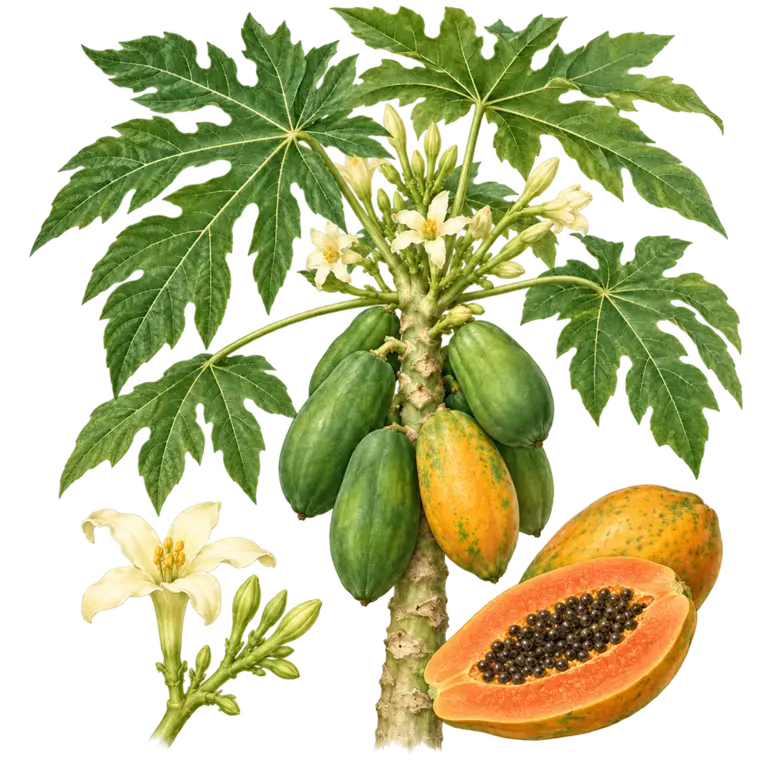
Papaya
Short-lived tropical fruit tree; self-fertile cultivars simplify cropping.
Sowing & planting windows in Australia
Planting timing varies by broad Australian gardening zone. Local weather, unusual seasons and your garden’s microclimate can shift timing.
Cool
Plant nursery stock · Not generally recommended
Temperate
Plant nursery stock · Oct–Dec
Core months: October, November, December
Subtropical
Plant nursery stock · Sep–Mar
Core months: January, February, March, September, October, November, December
Tropical
Plant nursery stock · All year; avoid saturated peak-wet sites
Core months: January, February, March, April, May, June, July, August, September, October, November, December
Arid
Plant nursery stock · Sep–Nov
Core months: September, October, November
Getting started
Plant a healthy nursery seedling without disturbing its root ball.
The right conditions
A hot, frost-free, wind-sheltered site with sharply drained soil.
As it grows
Feed and water regularly in growth but never leave roots saturated; support young plants in wind.
Ready to harvest
Pick as skin begins to yellow and ripen off the tree if pest pressure is high.
Important cautions
Papaya latex may irritate skin; protect plants from frost and waterlogging.
Related how-to guides
Check a crop’s pollination needs
Identify the crop and cultivar: self-fertile, self-incompatible, separate male and female plants, and seedless fruiting types have different needs.
Plant guidance: Desk-reviewed under the approved horticultural-synthesis method; not field-tested. Planting windows are a guide rather than a rule.